
Materials
CNC Machining Metals
| Materials | Description | Price |
|
Aluminum |
Lightweight, corrosion-resistant, and highly thermally conductive, making it an excellent choice for complex designs and weight-sensitive applications. | $ |
|
Copper |
Offers excellent electrical and thermal conductivity, good ductility, natural antimicrobial properties, and efficient heat transfer performance. | $$$ |
|
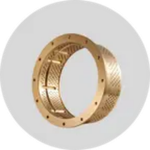
Brass |
Durable and easy to machine, with an attractive golden appearance, making it well suited for precision components and decorative applications. | $$$ |
|
Bronze |
Highly resistant to corrosion, particularly in marine environments, and commonly used for bearings, bushings, and other wear-resistant components. | $$$ |
|
Steel |
Strong and durable, with a wide range of available hardness levels and grades suitable for various industrial applications. | $$$ |
|
Stainless Steel |
Provides excellent corrosion resistance and maintains good strength at elevated temperatures, making it suitable for both functional and appearance-critical applications. | $$$ |
|
Magnesium |
One of the lightest structural metals, offering a high strength-to-weight ratio and good machinability for weight-sensitive applications. | $$$$$ |
|
Titanium |
Offers an excellent strength-to-weight ratio and outstanding corrosion resistance, making it an important material for aerospace, medical, and high-performance applications. | $$$$$ |
Plastics for CNC Machining
| Materials | Description | Price |
|
ABS |
Durable, impact-resistant, easy to machine, and thermally stable, making it suitable for detailed CNC-machined components. | $$ |
|
PC (Polycarbonate) |
Offers high impact strength, good transparency, heat resistance, and machinability, making it suitable for precision components that require optical clarity. | $$ |
|
PMMA (Acrylic) |
Provides excellent optical clarity, good UV resistance, and easy machinability, making it ideal for appearance-critical and transparent components. | $ |
|
POM (Acetal) |
Offers high rigidity, low friction, excellent dimensional stability, and good wear resistance, making it an ideal material for precision mechanical components. | $$ |
|
PA (Nylon) |
Provides high strength, good wear resistance, and excellent durability, making it suitable for functional parts and complex geometries. Its moisture absorption should be considered where tight dimensional tolerances are required. | $$ |
|
PE (Polyethylene) |
Offers good chemical resistance, a low coefficient of friction, easy machinability, and vibration-damping properties, making it suitable for lightweight and low-friction components. | $$ |
|
PEEK |
Provides excellent thermal stability, high mechanical strength, and strong chemical resistance, making it suitable for demanding, high-performance components. | $$$$$ |
|
PP (Polypropylene) |
Offers good chemical resistance, excellent fatigue resistance, low density, and good heat resistance. It is suitable for lightweight functional parts, although its flexibility should be considered during precision machining. | $ |
|
PTFE (Teflon) |
Features an extremely low coefficient of friction, excellent heat resistance, and strong chemical resistance, making it ideal for non-stick, sealing, and low-friction applications. | $$ |
|
PS (Polystyrene) |
Lightweight, rigid, dimensionally stable, and easy to machine, making it suitable for prototypes, models, housings, and low-load components. However, it has relatively low impact and heat resistance. | $$ |

.png?w=150&h=150)
Injection Molding Materials
| Materials | Description | Price |
|
ABS |
Offers good toughness, impact resistance, moderate heat resistance, and reliable mechanical properties. It is easy to process and widely used for housings, enclosures, and functional components. | $$ |
|
PC (Polycarbonate) |
Provides high impact strength, excellent transparency, good heat resistance, and stable mechanical and optical properties. It is suitable for transparent and high-strength components. | $$ |
|
PA (Nylon) |
Offers high strength, excellent wear resistance, and good chemical resistance. Nylon is widely used for gears, bushings, structural parts, and other functional components. However, it absorbs moisture, which may affect its dimensions and mechanical properties. | $$ |
|
PE (Polyethylene) |
Provides good chemical resistance, low moisture absorption, excellent ductility, and strong impact resistance. Different PE grades are available for a wide range of industrial and consumer applications. | $$ |
|
PMMA (Acrylic) |
Offers excellent optical clarity, good UV and weather resistance, high surface quality, and good dimensional stability. It is commonly used for transparent covers, lenses, displays, and appearance-critical components. | $ |
|
POM (Acetal) |
Provides high stiffness, excellent dimensional stability, low friction, good wear resistance, and strong mechanical performance. It is well suited for precision gears, bearings, fasteners, and other mechanical components. |
$$ |
|
PEEK |
Offers excellent mechanical strength, chemical resistance, and high-temperature performance. It is suitable for demanding applications in aerospace, medical, automotive, and industrial equipment. | $$$ |
|
PBT |
Provides good mechanical properties, high heat resistance, excellent electrical insulation, good dimensional stability, and low moisture absorption. It is commonly used for electrical connectors, housings, and automotive components. | $$ |
|
PP (Polypropylene) |
Offers excellent chemical resistance, strong fatigue resistance, low density, good heat resistance, and cost-effective processing. It is widely used for living hinges, containers, housings, and consumer products. | $ |
|
PTFE |
Features an extremely low coefficient of friction, excellent heat resistance, strong chemical resistance, and outstanding non-stick properties. It is durable and suitable for seals, insulating components, and low-friction applications. | $$ |
|
HDPE (High-Density Polyethylene) |
Offers a good strength-to-density ratio, low weight, strong chemical resistance, low moisture absorption, durability, and cost-effectiveness. Food-contact-compliant grades are available for suitable applications. | $ |
| PS (Polystyrene) | Provides good rigidity, easy moldability, and good transparency in general-purpose grades. However, standard PS has relatively low impact strength and limited heat resistance. | $ |
| HIPS (High-Impact Polystyrene) | Offers improved impact resistance compared with standard PS, along with good rigidity, easy processing, good colorability, low weight, and stable dimensions. | $ |
| PPS (Polyphenylene Sulfide) | Provides excellent high-temperature resistance, strong chemical resistance, inherent flame resistance, high stiffness, good dimensional stability, and low moisture absorption. | $$$ |
| PET (Polyethylene Terephthalate) | Offers good transparency, low weight, mechanical strength, toughness, and excellent barrier properties. Food-contact-compliant grades are available for packaging and related applications. | $$ |
| LDPE (Low-Density Polyethylene) | Provides excellent flexibility, softness, low density, toughness, chemical resistance, and easy processing. Food-contact-compliant grades are available for suitable packaging and consumer applications. | $$ |
| PVC (Polyvinyl Chloride) | Available in rigid and flexible grades, PVC offers good chemical resistance, flame-retardant properties, electrical insulation, dimensional stability, and processability. Processing conditions must be carefully controlled. | $ |
| UHMWPE (Ultra-High-Molecular-Weight Polyethylene)-UPE | Offers exceptional wear resistance, self-lubricating properties, high impact strength, strong chemical resistance, a low coefficient of friction, and good non-stick performance. Food-contact-compliant grades are available for suitable applications. | $$ |
| TPE (Thermoplastic Elastomer) | Provides a soft, flexible, and rubber-like feel, along with good elasticity, weather resistance, and easy molding. Different grades are available for grips, seals, protective components, and consumer products. | $$ |

Sheet Metal
| Materials | Description | Price |
|
Aluminum |
Lightweight, corrosion-resistant, thermally conductive, and highly formable, making it well suited for complex bending, forming, and lightweight sheet metal components. | $$ |
|
Brass |
Offers good strength, corrosion resistance, formability, and a distinctive decorative appearance, making it suitable for decorative parts, precision components, and detailed sheet metal work. | $$$ |
|
Copper |
Provides excellent thermal and electrical conductivity, good ductility, and strong corrosion resistance, making it ideal for complex forming, bending, and electrical applications. | $$ |
|
Steel |
Strong and durable, with a wide range of grades and hardness levels. It can withstand high loads and is suitable for robust structural components and industrial applications. | $$ |
|
Stainless Steel |
Offers excellent corrosion resistance, maintains good strength at elevated temperatures, and provides an attractive surface finish, making it ideal for exposed, functional, and appearance-critical components. | $$ |
.png?w=150&h=150)
.png?w=150&h=150)
.png?w=150&h=150)
.png?w=150&h=150)
.png?w=150&h=150)